
Canoe Games
Discover a large collection of canoe games to ensure your day on the water is fun and engaging.
Introduction
Canoe games are a fantastic, fun way for participants to build comfort, confidence, and skills by practicing foundational techniques like torso rotation and efficient strokes. These offer a low-pressure and engaging environment, turning learning into play through activities like racing and obstacle courses.
Safety Considerations
Instructors need to ensure the following, but not limited to:
- When to go and when not to go (for example, weather conditions or water temperature).
- What activities will work well in certain weather conditions and which ones won’t.
- Aware of changing weather conditions (for example, wind, storms, lightning, etc.).
- Safety briefing:
- All participants are wearing their life jacket/PFD while on the water.
- Clear boundaries to limit injuries and exposure to hazards.
- Sunscreen, glass straps, hats and water bottles
- Activities and games are clear of hazards.
- Spacing between participants is adequate for the activity.
- Activities match the participants comfort level.
- The location of the first aid kit/room/camp protocol. Instructors should carry a small “ouch kit”: wipes, bandages (small and large).
- If the water temperature is below 15℃, ensure that equipment is immediately available or that procedures are established to protect the participants from the effects of hypothermia or cold shock resulting from swamping, capsizing or falling overboard.
- Ensure shore personnel (camp staff) know when and who will be engaged in waterfront activities.
List of Canoe Games
Aye Aye Captain or Whistle While You Work
On shore, the instructor will describe what each whistle means and what participants must do when they hear the signal.
- One blast: “Attention” – stop, look at me and salute/listen
- Two blasts: “Raft Up” – stop and group together, stand side
- Three blasts: “Emergency” – stop and head to a designated area/shore
The instructor will then get everyone to move around one another as if they are paddling a canoe, repeating: “paddle, paddle, paddle, – whistle blast(s)”. The instructor will alternate blasts to ensure everyone knows what each means.
Ensure ground is void of hazards.
Barrel Bonk
Half fill two or three barrels or buckets (with lids) with water and place them in the play area. Paddlers get one point for touching a barrel with the bow stem of their canoe and two points for touching a barrel with the stern stem of their canoe. They lose three points for touching another boat (both boats involved lose the points). Boats cannot gain points by touching the same barrel twice in a row. Start the play with a whistle blast and end it with another whistle blast about five minutes later.
Blind Canoe Race
Three paddlers per canoe. Bow and stern paddlers are blindfolded. Middle paddler must direct bow and stern paddlers along the course. Canoes line up on the starting line. Ahead place two buoys close together with enough room for only one canoe width. Obstacles such as buoys can be positioned along the course for the paddlers to manoeuvre around. On ‘go’ canoes race to the buoys and the first team to get through wins. This can be done with just the two paddlers, blindfolding the stern person with the bow person giving directions.
Bus Stop
Create a course using buoys as “bus stops”. Two paddlers start the race, and the rest of the team members are positioned at various ‘stops’ along the course; perhaps in the water if the weather is warm, or in other canoes. Each team goes through the course picking up another team member at each stop. If using canoes, only one person from the canoe can be picked up. The other must remain in the canoe. The first team that returns wins. It is a great activity for a hot day. Teams can get as large as 8 per canoe.
Canoe Rescue Race
In groups of four: 2 canoes/team, the fastest team to perform a canoe rescue, with or without swimmers (depending on location, weather, and cold water), wins.
Canoe Polo
Canoes are arranged into two teams. Set up a boundary with one buoy at either end. Each team passes the ball (using hands or paddles) among themselves to try to score by hitting their buoy (net) with the ball.
Check Stop
Canoes line up facing the instructor. The instructor is facing the group and calls out “GO” and places the paddle in-front of their face. The paddlers move forward slowly. The instructor yells “CHECK” and waits 3 seconds and then moves the paddle away from their face. Any canoes that are still moving forward must skip the next round. The instructor continues with GO and CHECK until a winner passes the instructor.
Cinnamon Roll
This shore based activity highlights how to conserve/reduce body heat when the canoe has capsized in the water.
The instructor will demo on the ground what the HELP (Heat Escape Lessening Posture) position looks like. The participants will demo the same HELP position. The instructor will ask why this is important and what heat loss areas are protected.
The instructor will ask what to do if there are more than two people in the water? HUDDLE position. If the participants are comfortable or know each other well, try the ‘HUDDLE’ position or a ‘cinnamon roll’ style. Ask who might be in the centre of this position and why?
HELP: curling into a fetal-like ball (knees to chest, arms held closed to the front of the lifejacket) to protect heat-loss areas.
HUDDLE: form a circle, wrap arms around each other’s backs, pull close so lifejackets touch, and intertwine legs. Place children or the coldest person in the middle and keep movements to a minimum.
Clowning Around
This activity is for those hot days. Have an empty canoe in deep enough water where the participants can not touch the bottom of the lake. The participants are swimming or hanging onto the canoe. The goal is to see how many people can get into the canoe.
Crows And Cranes
Create two lines with the canoes, facing the same direction, one following the next, with about two feet from the canoe in front. The two lines of canoes will be approximately one canoe length away from the other line (approximately 16 ft between the lines). One line is called “crows” and the other is “cranes”. When the leader calls “crows”, that group moves sideways, with the “crows” trying to catch the “cranes”. The leader may call crows or cranes at any time, changing who is chasing and who is trying to escape. The leader can call the other group’s name at any time to reverse direction.
Dead Fish Polo
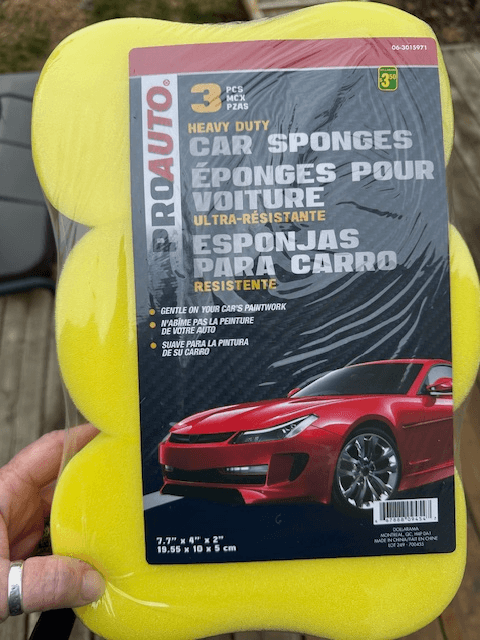
Gear: Sponges (your ‘dead fish’) “expect to get wet”
Gather the group together (raft up or spread out). The leader disperses (spreads out on the water) the sponges/fish prior to the introduction of the game, or after one introduces it. The object of the game is to get the fish out of the water and into a canoe, that is, someone else’s canoe! You can only touch the fish with your paddle blade. You can’t go beyond the marked boundaries or put a fish in your own canoe. When all the fish have been collected (or a designated time is given) the game will be over.
Demo TIP: The best way to pick up the fish is to slice the fish in half with the edge of the paddle blade, scoop down into the water, around, and up out of the water for that awesome toss.
The winner has the fewest fish in their canoe.
How to Create Your “Fish”
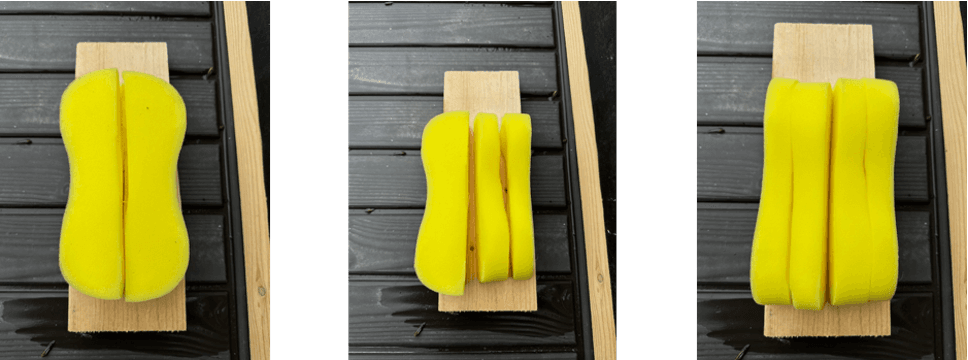
- Large sponges work best.
- Cut the sponge lengthwise.
- Rotate the sponge on its edge and cut it in half lengthwise again.
- One large sponge produces 4 fish.
- Have at least 4 fish per canoe.
- Store sponges in a laundry bag for optimal drying (airflow).
Draw What!
This can be done on shore or in the canoes rafted up. White boards are needed for every pair of paddlers. This also could be done on the sand or with water based markers on the bottom of canoes or on paddles.
This activity will show that communicating with one’s partner may sound easy, but it can also be quite harder.
First round: In groups of 2 decide who will draw and who will communicate the image. The person drawing must close their eyes, look away, or turn around. The communicator will look at picture # 1 (circle). The communicator must return to their partner and tell them what to draw, without saying the word, circle for example. Should be relatively easy. After everyone has completed the drawing, the drawings will be shared with the whole group and instructor.
Second round: After wiping off the illustration the board is passed to their partner and now, they must look at the next picture #2 (two half circles). They now must describe what to draw without saying the word circle plus only give them 15 seconds to draw the picture. This one is a little harder. Still the box but split in two and rearranged. Everyone will share what they drew.

Question: Communicating can be easy and it can also be stressful. When do you think canoeing might become stressful between partners?
Possible answers: approaching a shore too fast, hitting/bumping another canoe or dock, changing directions in a hurry, windy where it might be hard to hear, etc.
Summary: Stay calm, slow down when speaking and realize others may not understand what you are trying to tell them at first.
Enter/Exit Challenge
An empty plastic bowl/container is filled with water and placed on the centre thwart of the canoe. The paddlers are challenged to enter or exit without tipping the tub or spilling any water. The race could also be completed by having the canoes race without spilling a drop.
Foam Floats
Canoes line up at the start. Each canoe receives a plastic card with a number or symbol on it. Depending on the number of canoes there can be up to 4 cards per canoe. That number/symbol corresponds with the number/symbol on the underside of a small foam float, floating on the water (within a boundary). On the whistle, canoes paddle out to find their foam floats. Floats that do not match must be thrown away for another canoe to find. The first canoe to find all their floats is the winner.
Follow the Leader
Canoes line up, bow to stern. The lead canoe starts with a manoeuvre. With one move at a time, each canoe must repeat the move correctly. Each canoe in succession takes a turn at adding a move to the previous moves until a sequence or short routine has developed. As each new move is added, all participants must successfully complete the routine in proper order. Errors of any kind result in elimination from the game. The game continues until one person (solo) or canoe team (tandem) is left who can do the entire sequence. For example: paddle forward, 360 pivot turn, paddle forward, paddle backwards, 180 pivot turn, etc.
Grip/Shaft Race
The same as any paddle forward race except that paddles are turned upside down.
Hand Race
Start with 2 per canoe, then increase by one after each race. Record times to see how they do.
Match It
Game cards are laid upside down near each paddle/canoe. The players are split into two teams. As a relay, the first person from each team runs up to the paddle/canoe, picks up a card and lays it on the proper part. As a beginner game, you might let other teammates help tell where the proper parts are if the runner doesn’t know. Play continues until all the parts of the paddle/canoe are labeled correctly. An option might be to have the instructor call out the part names instead of cards.
Mirror Mirror on the Water
The instructor informs one pair of paddlers to do exactly what they do (for example, how to safely enter a canoe at the shoreline or dock). The instructor will inform the other paddlers to watch and see what they might have done differently. The instructor will not speak through their “demo”. At the end of the activity the paddlers will share what they saw. The instructor explains those key points for all to remember and then gets everyone to do the same.
Ping Pong
Canoes line up at the start and on the whistle, collect as many balls (for example, coloured pit balls, ping pong balls, etc.) as they can that are floating on the water. The most balls wins. An option could be to number the balls 1 to 4: at the end the winner is the team with the highest totalled number.
Raft and Rotate
Two canoes per team. Each team has a designated buoy. At ‘go’, teams paddle their canoes to their buoy. At the buoy, teams raft up and switch ends in their canoe. Once ends are switched, they race back to the finish line.
Option: Once rafted up (switching not required), they stay rafted together and paddle back to the finish line.
Rock the Boat
While one person rocks the canoe, from the bow or stern end (not the sides), the two paddlers try different positions to keep the canoe stable. The paddlers will start with sitting on the seat with knees up (knees together vs knees against gunwales), then kneeling (if possible) while resting on the seat, and finally sitting on the bottom of the canoe.
Rock the Boat Race
Great activity for a hot day. Ensure everyone is comfortable swimming. This could be the last game of a session. Partner up and decide who will be in the stern and who will be in the bow. The bow person will be the “disrupter”. The “disrupters” will exchange places, so that they are paddling with the stern from another team. The teams will race to the finish line, however the disrupter in the bow will not be paddling, they will be rocking the boat.
Saboteur Race
Teams of three people per canoe. Teams decide who will be the paddlers (2) and who will be the “Saboteur” (1). The Saboteur will be switched into the opponent’s canoe and sit in the middle of the canoe with a bailer in hand. Teams race to the finish line (shore) while the Saboteur bails water into the canoe they are in. The team with the least amount of water in the canoe wins.
The padders will empty the water along the shoreline. Run three races, with the same team members (ensuring the Saboteur is rotated into an opposition’s canoe), rotating the positions so each paddler gets to experience the bow, stern and saboteur position.
This game can be reversed: Hero Race
Swamp the canoe half full of water. On the signal, the paddlers paddle to the finish line as the “Hero” bails water out of the canoe. The winning team is the canoe that has the least amount of water in it. Could be the first canoe that arrives on shore or last.
Shape Shifter Challenge
In groups of three canoes or more, canoes will form different shapes or letters. The instructor will call out the shapes, and the paddlers will create them. For example, the canoe groups may be asked to form a triangle, a square, or letters “L” or “N”, etc.
Simon Says Parts of the Canoe/Paddle
Simon says touch the specific parts of the canoe and/or paddle. “Simon says touch the bow seat… touch the stern seat. Those that touch the stern seat or go to touch the stern seat are eliminated.
Stand By Me
While on shore the instructor will ask the paddlers to seek out and stand by what they feel might be a shoreline hazard. The instructor will then go around the group asking each person to identify the hazard, inform the group why it is a hazard and finally how they could avoid the hazard to keep safe.
Tug of War
Two canoes face each other (3 or 4 people per canoe) with a loose canoe-length painter rope between them. The bow paddlers hold the rope, without changing where they hold the rope, while the other paddlers try to paddle backwards. The canoe that pulls the other canoe past the starting midpoint is the winner.
What Time is it Mister Wolf?
Canoes are spread apart with enough room to pivot without hitting another canoe. The group will be facing the instructor, who is at the 12 o’clock position, with 6 o’clock behind the group. The group will call out, “What time is it Mister Wolf?” and the instructor will reply with a time (for example, 3 o’clock or 9 o’clock). The fastest into position wins. After a short period of time the instructor would call out 2:30 and see what the group does.
Why oh Why? Or What’s in the Bag? Or Dress for Success!
This can be done on shore or in the canoes rafted up.
This activity is to identify why certain items are or are not important when one goes out for a paddle. The instructor will have a set of flash cards (or the real items) to show the group. Revealing one at a time, the instructor asks individuals or the group why certain items are important?
Flash Cards: raincoat, sunscreen, bug repellent, hat, water jug, sunglasses, throw bag, life jacket, bailer, sweater, mobile phone, whistle, compass, waterproof flashlight, dry bag, first aid kit, book, deck of cards, rubber ducky, etc.
Being prepared means a safer and more enjoyable paddling experience.
Last updated: April 11, 2026
Published: January 19, 2026